Run a small thought experiment: the main water valve to your street just closed. Nothing dramatic — a contractor two blocks over found the water main the hard way, and the utility's recording says 48 to 72 hours. Here is the part nobody tells you while you're staring at a dry faucet: your house is already holding forty or fifty gallons of clean water. You just don't know where it lives.
Where Water Hides in a House
Three places. All of them boring. All of them real.
The water heater. If you have a tank-style heater, it holds 40 to 50 gallons of the same municipal water you drink every day. There's a drain valve at the bottom that accepts an ordinary garden hose. Two things to learn on a calm Saturday rather than a bad Tuesday: how to shut off the power or gas first, and how to open the pressure-relief valve on top so the tank actually drains instead of glugging at you.
The toilet tanks. The tank, not the bowl. Each one holds 2 to 3 gallons that arrived through the same pipe as your kitchen tap. (Skip this one if you use drop-in tank tablets — the blue water is for looking at, not drinking.)
The freezer. Today's ice is a gallon or two of water once it melts. And a half-empty freezer runs better half-full of water jugs anyway: the thermal mass keeps food colder longer when the power blinks, and every jug is future drinking water wearing a disguise.
Add it up and a family of four is standing on three or four days of drinking water before spending a dollar. The catch is the word drinking. The other catch is access — water you can't get out of the tank is just decor.
The Honest Math
One gallon per person per day. That's the working floor: half a gallon to drink, a quarter for cooking, a quarter for teeth, hands, and the dishes that truly can't wait. A family of four needs 12 gallons for 72 hours at that rate — and that rate assumes it isn't August, nobody is sick, and nobody flushes a toilet with clean water.
The number that startles people is the comfortable one. Add real hygiene and a little flushing and you're at 3 to 4 gallons per person per day — call it 48 gallons for the same three days. Twelve gallons is survival. Forty-eight is dignity. Most households should aim between the two, and know exactly which trade-offs they're making on the way.
Storage That Doesn't Become a Shrine
Two rules, both learned the hard way by everyone who has tried this.
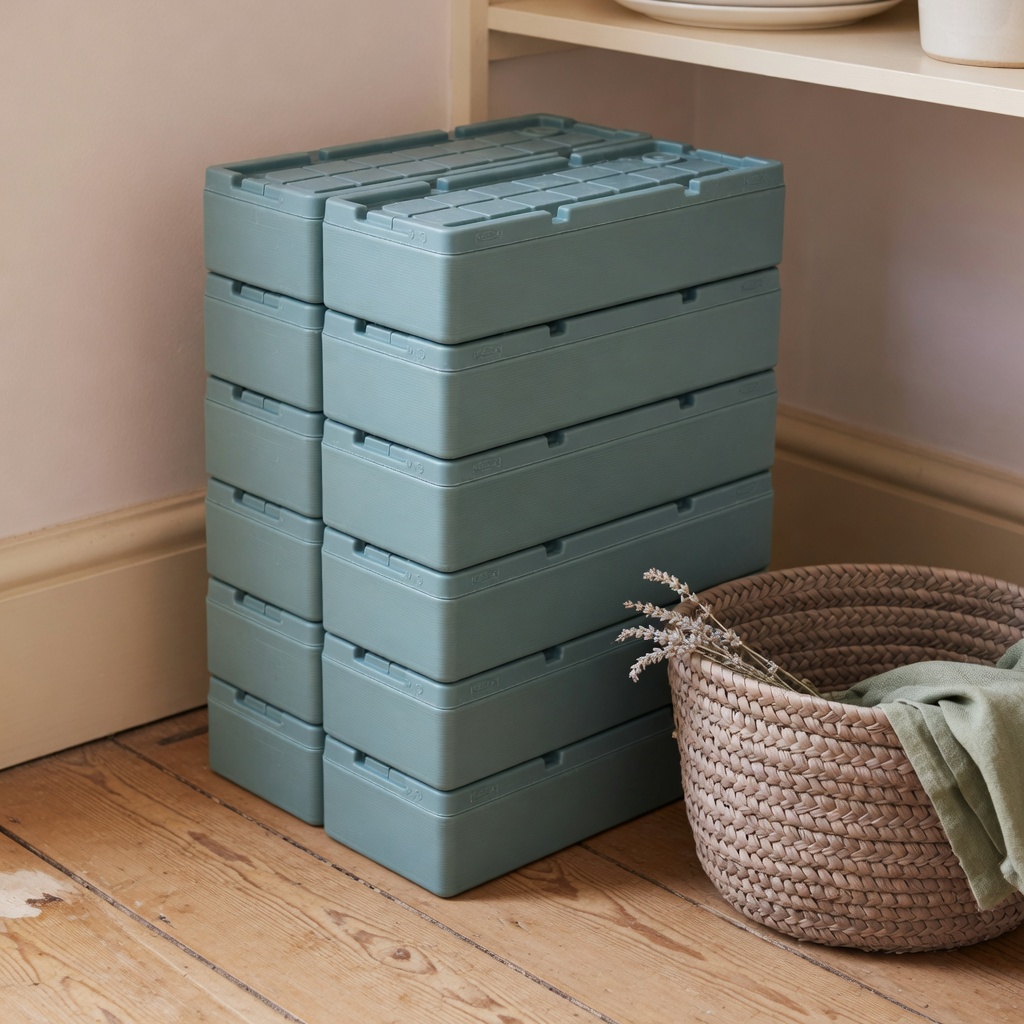
First: no milk jugs. They are biodegradable by design. In eight months you'll have a sticky shelf and a smell. Use food-grade containers built for the job — stackable water bricks are the suburban sweet spot at 3.5 gallons each, with a molded handle, stacking like masonry so a column in a closet corner quietly holds 20 gallons without annexing the garage.
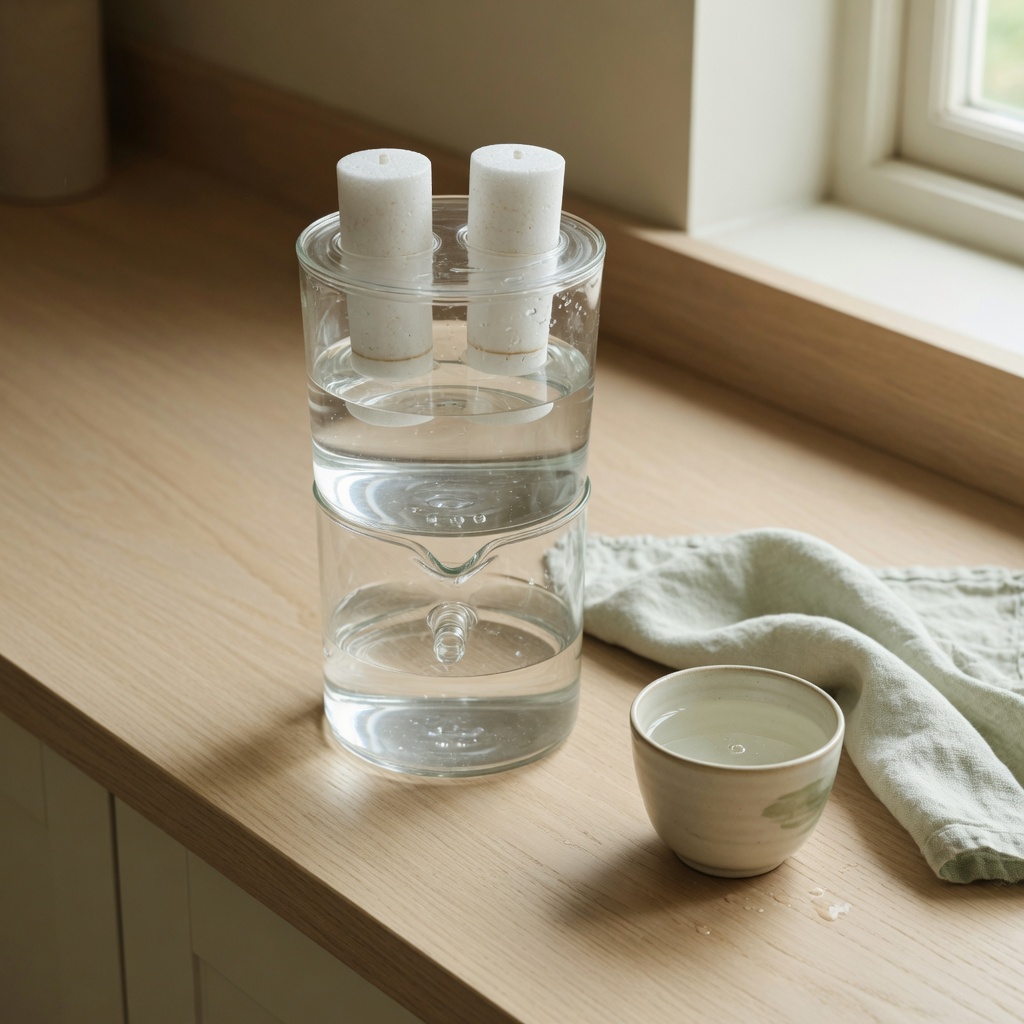
Second: rotate, or better, use. Water doesn't expire, but containers and taste do. Pour stored water into the garden and refill it every six months — when the clocks change works as a memory hook. The elegant dodge is to keep part of your storage in daily service: a glass countertop gravity water filter, refilled every evening, becomes the water your family actually drinks. It rotates itself, and it is easily the prettiest object in this whole plan.
The Filter Is the Deep End
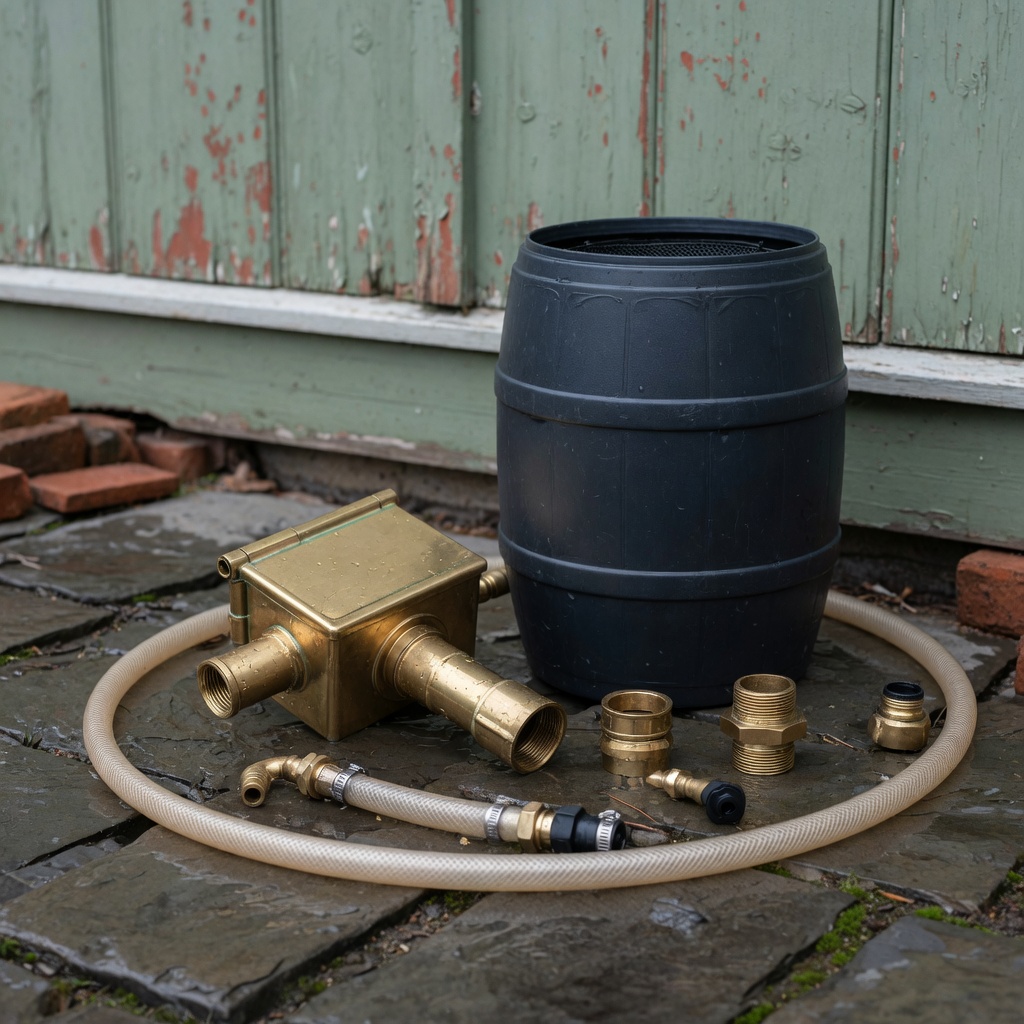
Storage is arithmetic — it only ever subtracts. Filtration compounds. Once you can make questionable water safe, every gallon within walking distance becomes inventory: the rain barrel under your downspout (a simple diverter kit turns one gutter into 50-plus gallons per decent storm), a neighbor's pool for wash water, the creek behind the school if it genuinely comes to that. A gravity filter needs no power and no pressure. You pour water in the top, ceramic elements do the slow patient work, and each element is good for thousands of gallons.
That's the line between stored water and water security — and it's the part of the plan you'll lend out. Gallons are hard to share by the dozen. A filter shares itself all day.
The Unglamorous Half
Here's what the cheerful checklists skip: when the taps stop, sanitation fails faster than thirst hurts. Plan the toilet before you plan the beverages. A five-gallon bucket, a snap-on seat, heavy trash bags, and a bag of wood shavings or cat litter — under $40, and it stores nested inside itself — keeps a bathroom civilized for a week. Put a hand-washing station by the back door: a jug with a spigot, a bar of soap, a towel on a nail. Wash dishes in three basins — wash, rinse, sanitize — and you'll use a tenth of the water a running tap would.
None of this is glamorous. All of it is the difference between a camping story and a health problem.
This Week
Go find your water heater's drain valve. Actually touch it. That's the whole assignment, and it puts you ahead of most of your zip code.
Then have the easiest neighborly conversation in this entire subject — because water is the one topic nobody finds strange to talk about. Who on the street has a pool? Whose downspout already feeds a barrel? Who owns a filter? Three houses that know this about each other are most of the way to a street that shrugs off a 72-hour outage. If you're not sure which three houses you'd ask, name your three and find out. And since a quarter of your daily gallon is cooking water, pair this plan with the deep pantry that actually gets used — the two lists were always one list.
Reading is a way of having. This post is a knowledge offering — thinner evidence than a practiced kit, thicker than an unread tab.