Here is the whole strategy, short enough for an index card: figure out what Tuesday dinner already is at your house, then own the ingredients for thirty Tuesdays. That's it. No freeze-dried lasagna. No bucket of beige powders sworn to sustain you. Your actual food — just deeper.
Store What Tuesday Already Is
The standard failure runs like this: buy $500 of emergency meals at $8 to $12 a serving, stack them in the coat closet, and rediscover them in five years — half expired, all unfamiliar. That food was never yours. You never cooked it, so you never rotated it, so it never fed anyone. It was insurance paperwork shaped like calories.
Flip it. Write down the ten dinners your family actually repeats: the red-sauce pasta, the chili, the fried rice, the soup that happens when nobody had a plan. Now read the ingredient lists. Most family cooking resolves into a short roster of shelf-stable parts — rice, pasta, oats, flour, dried and canned beans, canned tomatoes, stock, oil, and the six spices you genuinely reach for. Those parts keep. White rice stores 4 to 5 years in an airtight container. Pasta, 2 to 3. Canned tomatoes and beans, 2 to 5. Honey is functionally immortal.
The Thirty-Tuesday Ledger
Real numbers for a family of four, thirty days, nothing exotic:
- Grains: 25 lbs of rice, 20 lbs of pasta, 10 lbs of oats, 10 lbs of flour — roughly $80 to $120.
- Proteins and fats: four dozen cans of beans, tuna, and chicken; 10-plus lbs of dried beans and lentils; olive oil and peanut butter — $150 to $200.
- Flavor: two cases of canned tomatoes, stocks, soy sauce, vinegar, honey, and a real spice shelf — $100 to $150.
- Morale: coffee, tea, chocolate, popcorn kernels, dried fruit — $60 to $100, and worth every cent by day four of anything.
Call it $440 to $650, total. Not per month — total, for a pantry that could feed you for thirty days and that ordinary grocery shopping keeps topped up forever after. You were going to buy this food anyway. You're just buying it early, on sale, in bulk.
One companion number: staples are thirsty. Rice, pasta, and beans all want water — about half a gallon per person per day of cooking water for a family — which is why this plan and the 72-hour water plan are one plan wearing two hats.
Rotation Is Cooking, Not Inventory
People imagine a deep pantry demands a clipboard, a spreadsheet, a laminated chart. It demands dinner.
The mechanics fit in one breath: new groceries go behind old ones, you cook from the front, and a Sharpie writes the purchase month on every can and bin. That is the entire inventory system. Gravity runs most of it.
The practice that actually matters is the pantry week: once a quarter, cook only from storage for seven days. Treat it as a game, because it is one. You'll learn that you stored brown rice nobody likes, that you're chronically short on stock, that the chili is better with the smoked paprika you almost didn't buy. A pantry week finds every gap in your plan while the grocery store is still open — the cheapest tuition you will ever pay.
Flavor Is Load-Bearing
Plain rice keeps a body going. Garlic, cumin, and canned tomatoes keep a household going. Those are different jobs, and the second one matters more with each passing day of any disruption. Budget for flavor like it's protein.
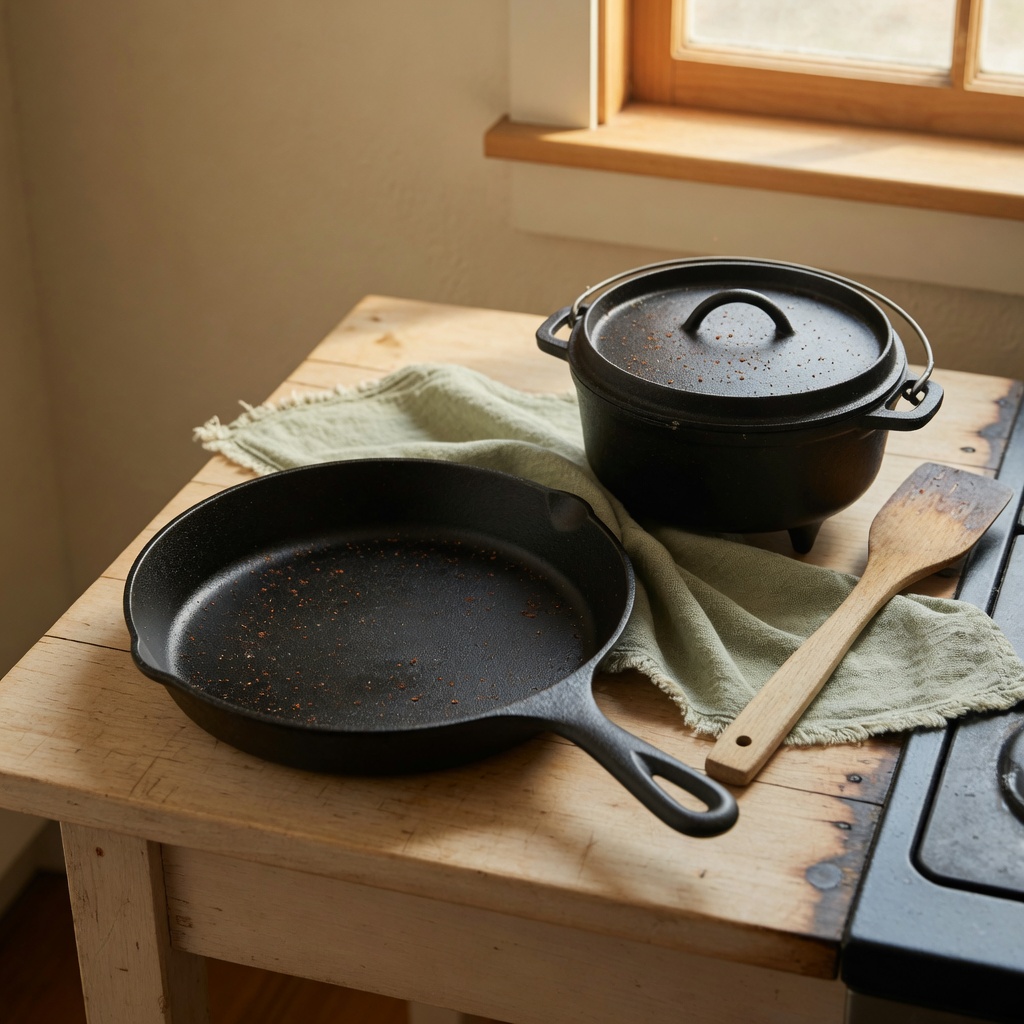
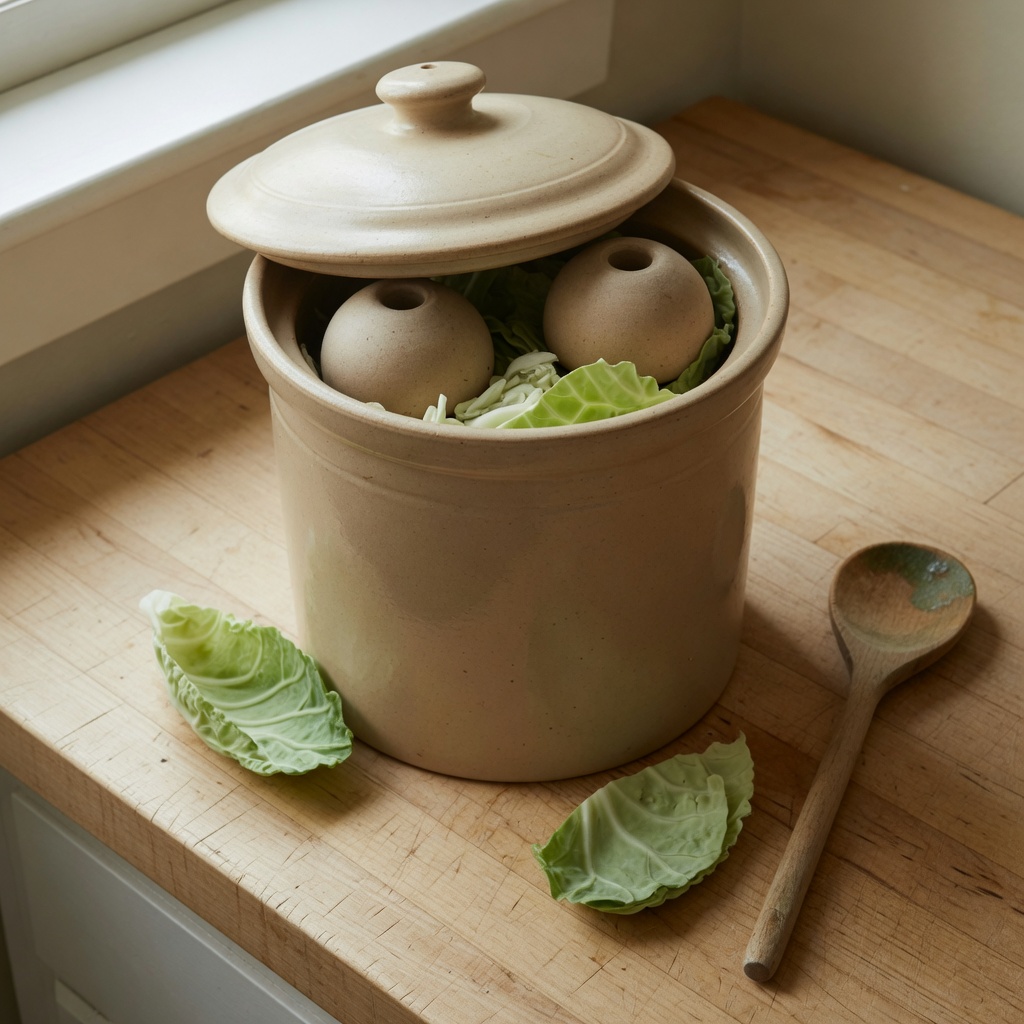
Two objects earn permanent space here. A cast iron Dutch oven turns cheap staples into food people request by name, and it is serenely indifferent to whether the heat under it is a stove burner, a camp stove, or coals. And a ceramic fermentation crock is the old technology hiding in plain sight: cabbage and salt go in, and a few weeks later you have a bright, live, keeps-for-months vegetable that never met a refrigerator. Your great-grandmother didn't call any of this preparedness. She called it the kitchen.
A Pantry Worth Sharing
A deep pantry has the friendliest failure mode in this whole field: dinner. Overbought beans become chili for the block. Extra flour becomes the loaves you hand over a fence. This is why we keep insisting that the first shared meal is the conversion event that matters — a pot of something feeds twelve nearly as easily as four, and a deep pantry is what fills that pot without a second thought.
Scale the picture up once, in your head. If a supply-chain hiccup ever parks on your street for a couple of weeks, three houses with deep pantries cooking in rotation feed a block calmly. Twelve houses each guarding shallow cupboards feed nobody well. Knowing which houses on your street really cook is worth knowing now — it's one of the better questions to settle when you name your three.
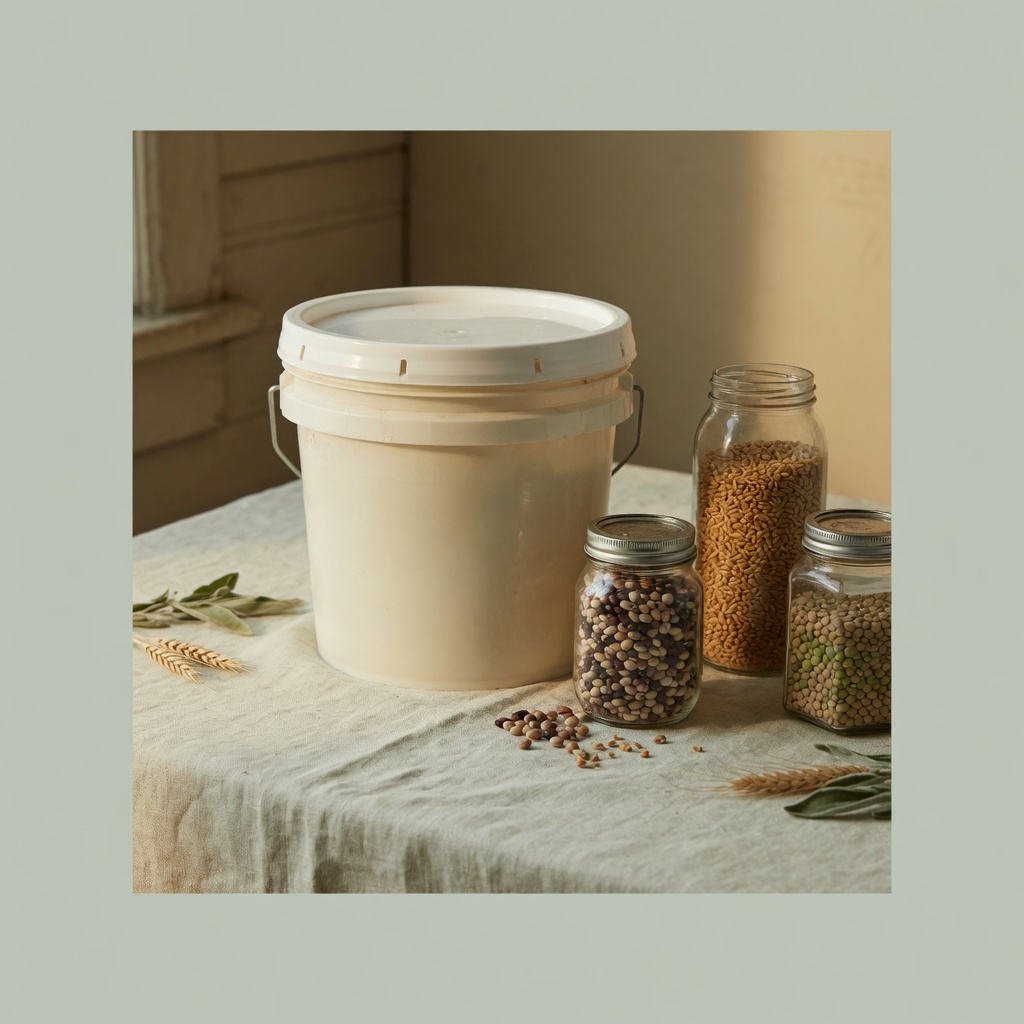
And yes, the sealed 30-day emergency food bucket exists — there's one on our shelves too. It isn't foolish; it's a floor under the floor. Buy it last, after the pantry is real, and hope to hand it to your kids someday, unopened, as a very heavy heirloom.
Start With a List, Not a Shopping Trip
Tonight, write the ten dinners. Circle every shelf-stable ingredient. On the next grocery run, buy two of each circled thing instead of one — sale pricing will often cover the difference. Six weeks of that and you're a month deep without ever once having gone "shopping for supplies."
You just shopped the way your grandmother shopped. The thirty days is a side effect.
Reading is a way of having. This post is a knowledge offering — thinner evidence than a practiced kit, thicker than an unread tab.