Two numbers break most backup plans. Central air conditioning draws 3,500 watts or more, and a furnace's blower alone draws 500 to 800. The battery bank that ran your refrigerator gallantly for three days will run your AC for about half an hour. If the comfort plan is "power the HVAC," that isn't a plan — it's a countdown.
The actual plan is smaller, older, and it works: stop trying to condition 2,000 square feet and condition one room instead.
Shrink the House
Pick two rooms this week, in your head or on foot: the January room and the July room.
The January room is small and interior — the least outside wall, the fewest windows, ground floor if you can, because a small interior room holds heat several times better per watt than the whole leaky envelope. Bonus physics: four human bodies throw off roughly 400 watts of free heat, which is meaningless in a whole house and meaningful in one sealed room.
The July room faces north or east, or better yet sits in the basement, which runs 10 to 20 degrees cooler than the upstairs in a heat wave without anyone lifting a finger.
In either season the move is the same: everyone lives and sleeps in the chosen room, blankets hang over its doorways, and the rest of the house is politely abandoned to the weather. One room at 85°F in July is livable. One room at 55°F in January is comfortable with layers. A whole house drifting past those numbers is neither.
Passive Moves First
Before any fuel or any watts, spend $100 to $300 on physics that never runs out.
For heat: thermal curtains cut window heat gain by 25 to 35 percent, reflective film by half, and in a genuine heat wave, foil-faced cardboard taped outside the glass is ugly and works. Then flush at night — when the outdoor temperature drops below indoors, open windows and let fans pull cool air through; seal everything at sunrise and hoard the coolness like money.
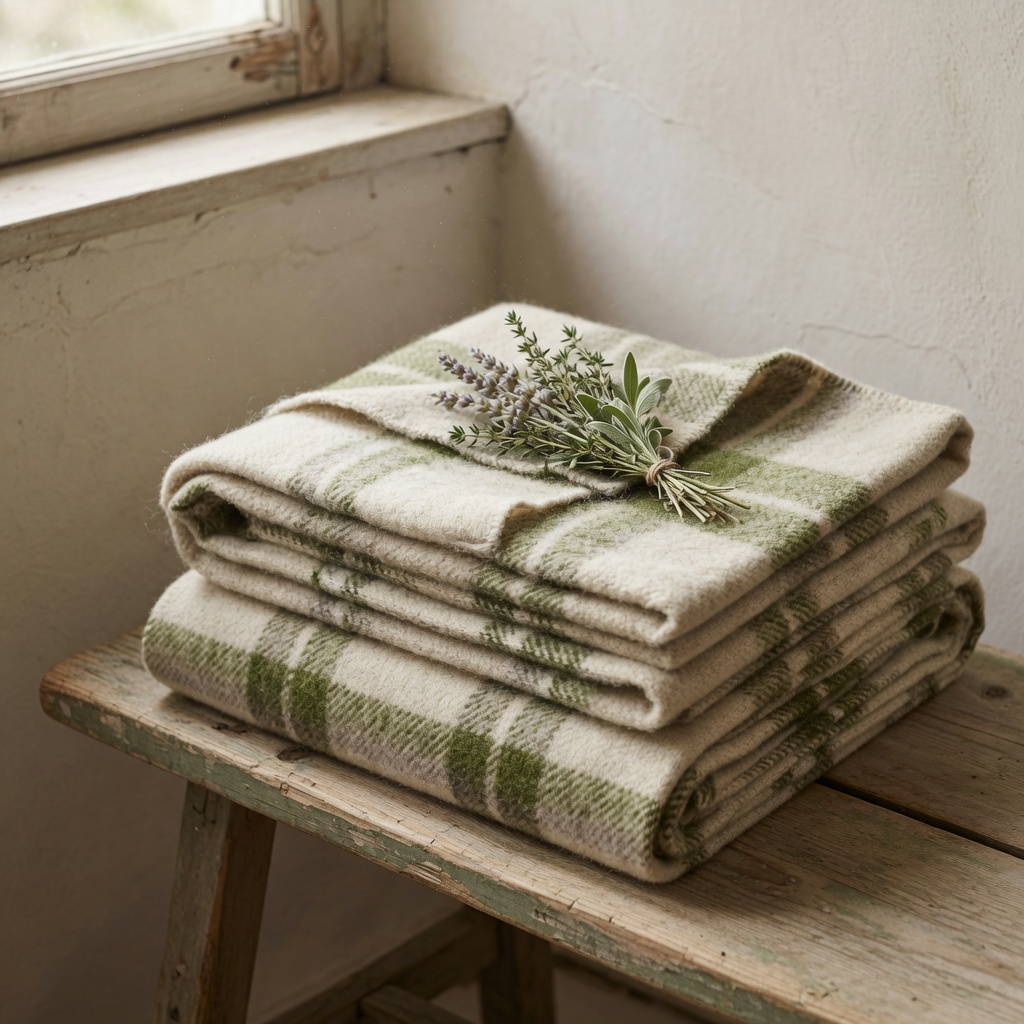
For cold: dress for a 55°F house — base layer, fleece, wool socks, a hat indoors — and you will be fine and faintly smug. Sleeping is the vulnerable hour, so build the sleep kit: bags rated to 20 or 30°F, a closed-cell pad for anyone on the floor (the floor steals more heat than the air does), a natural wool blanket per person — wool keeps warming even when damp — and a hot water bottle, nineteenth-century technology that remains undefeated.
The July Room
Take heat seriously; it is the deadlier direction. An indoor temperature above 95°F is dangerous for elderly people, infants, and anyone with a heart condition, and heat illness arrives faster than most people believe.
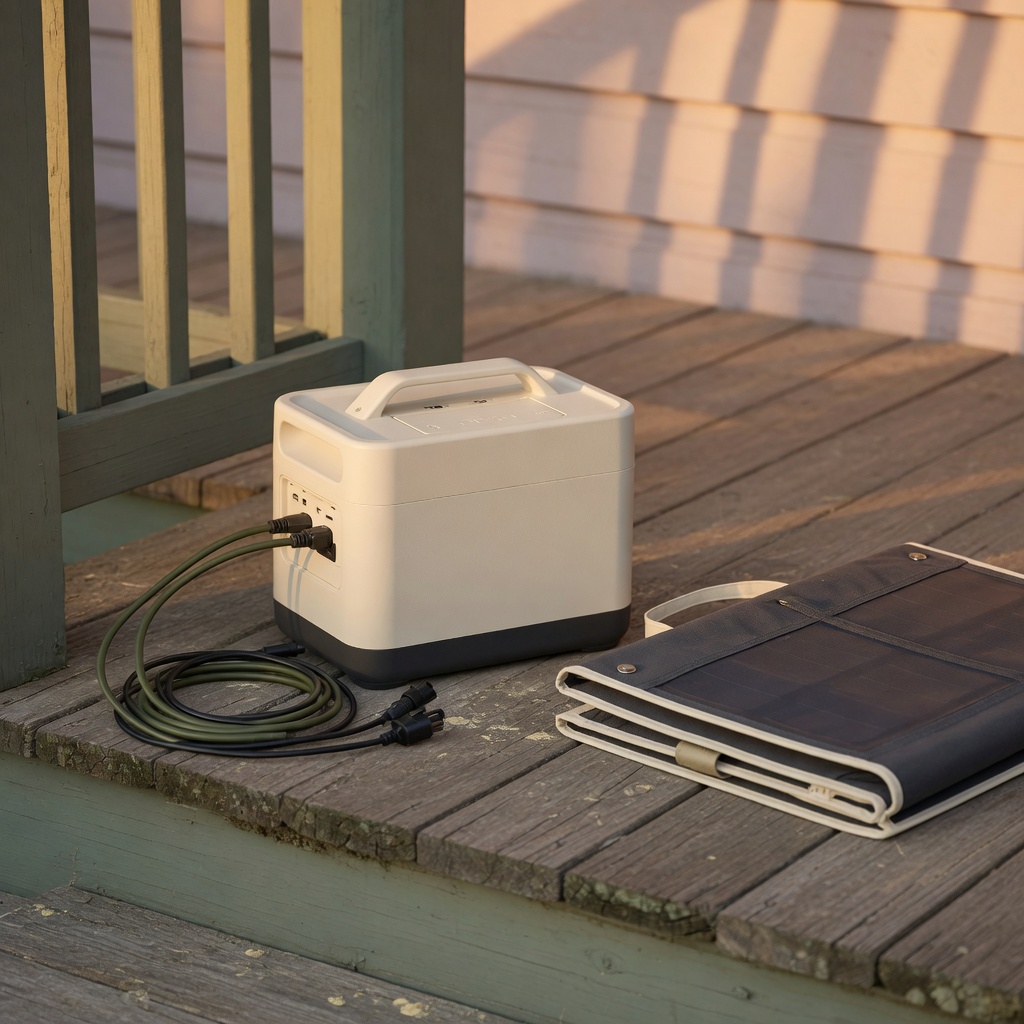
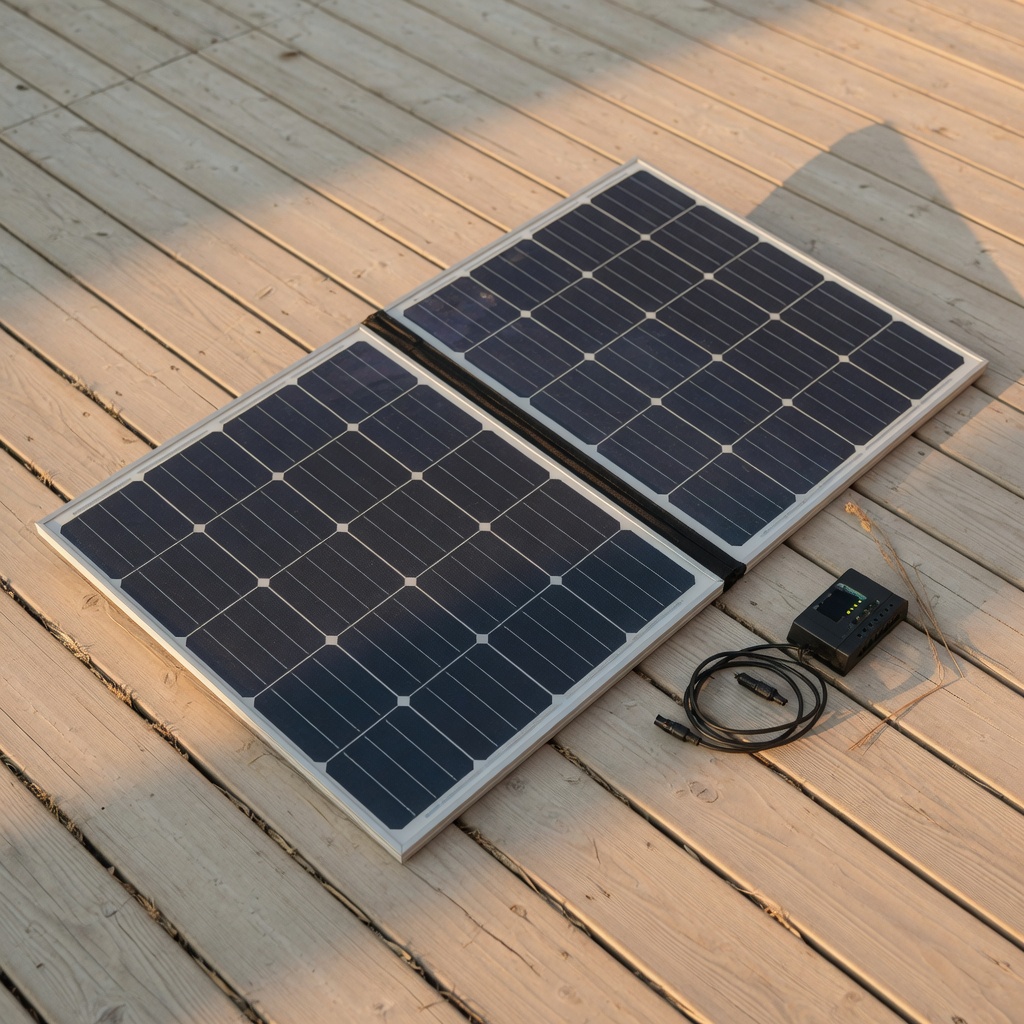
The cool-room playbook, in order: block the sun, then move air. A box fan draws 50 to 75 watts and makes moving air feel 5 to 10 degrees cooler on skin — which means a compact solar generator in the 1,000-watt-hour class runs one for fifteen-plus hours, and paired with a foldable solar panel it runs one more or less indefinitely. That is the entire honest overlap between batteries and climate: fans yes, AC no. In dry climates, hang a wet sheet in front of the fan and evaporation gives you real cooling for free; in Gulf-coast humidity that trick dies, and the answer is shade, moving air, water to drink, and the basement.
One more lifeboat: your car is a climate-controlled room that holds a quarter tank of comfort — four to six hours of intermittent AC, parked in the shade. Never in a closed garage. Not once.
The January Room
Cold is slower and more forgiving — layers and the sleep kit genuinely handle most of it — but it has a floor: when the house drops below 50°F, pipes start freezing, and vulnerable people are already at risk well before that.
For heat with no grid, the standard tool is a small indoor-rated propane heater in the 4,000-to-9,000 BTU class. The load-bearing words are indoor-rated: that means a low-oxygen shutoff and a tip-over switch. Even so, crack a window for ventilation, and treat a battery-powered carbon monoxide detector — thirty dollars — as an absolute condition of lighting any flame indoors. Fuel math: a 20-lb propane tank runs a small heater 10 to 20 hours at medium output, so two tanks cover a bad week of evenings in the one-room strategy. Store propane outside, never in the basement. If you have a wood stove or a fireplace insert, you already knew all of this, and your house is probably the one the street remembers.
The Street's Warm Room
Here's the arithmetic that makes this neighborly rather than lonely: a street needs about two houses running this play, not twelve. One warm room open from six to ten on the coldest nights — neighbors warm up, charge phones, play cards, then walk home to their own sleep kits. One cool basement open through the afternoon peak, with first claim going to the oldest and youngest on the block. That's the anchor-house pattern in miniature, and if it appeals to you, the hosting household guide is the full version.
Knowing who two doors down is over eighty, or has a newborn, or runs medical equipment matters more than any BTU rating in this guide. Ten minutes with the household assessment will show you where your own gaps are; a conversation over the fence shows you the street's.
Before the Season Turns
This week: choose your two rooms and stand in each one for a minute, noticing windows and doors. Then three purchases, none over $100 — thermal curtains for the west windows, a wool blanket per person, and the CO detector if any flame will ever burn indoors.
Comfort without the grid was never going to be a bigger battery — the quiet power guide covers what batteries honestly can and can't do. It's a smaller, warmer, better-loved room. Leave space in it for a neighbor.
Reading is a way of having. This post is a knowledge offering — thinner evidence than a practiced kit, thicker than an unread tab.