The Neighborhood That Shouldn't Have Made It
In July 1995, a heat wave killed 739 people in Chicago in a single week. Two neighborhoods on the South Side — same heat, same incomes, same aging housing stock — died at wildly different rates. Englewood lost 33 people per 100,000. Auburn Gresham, directly adjacent, lost 3.
The sociologist Eric Klinenberg spent years on the autopsy, and the difference was not air conditioning, money, or medicine. Auburn Gresham had living sidewalks: corner stores, block clubs, porches people actually sat on, neighbors who knew which elderly resident lived alone and knocked on her door when the temperature spiked. Its death rate came in lower than some of the city's wealthiest neighborhoods. The infrastructure that saved those lives was not pipe or wire. It was the habit of people being in each other's company — kept alive, day after ordinary day, by nothing more heroic than errands, card games, and front steps.
That is the claim of this axis, stated as plainly as we can: morale is infrastructure. Not a garnish on top of readiness. A load-bearing wall.
Why a Readiness Score Tracks Fun
Terrarium scores twelve capability axes, and culture_recreation sits in the list next to water and power, which reliably raises an eyebrow. No preparedness checklist anywhere tells you to own a deck of cards. Every one of them tells you to own a water filter.
But look at the record of actual long disruptions rather than imagined ones. The 1998 ice storm left parts of Quebec dark for over four weeks in January; ask people who lived through it what they remember, and you get lantern-lit card marathons and neighbors who suddenly had time for each other — the households that struggled worst were the isolated ones, not the unequipped ones. The institutions that manage true long-haul confinement already know this: Antarctic winter-over stations and submarine crews schedule games, film nights, and celebrations with the same seriousness they schedule equipment checks, because decades of experience says morale failure arrives before supply failure. Boredom and isolation break streets before hunger does. People abandon livable houses not when the pantry empties but when the evenings become unbearable.
Honesty about provenance, as always: those death-rate numbers from Chicago are measured; the claim that your street works the same way is our working theory, and it is the best-supported theory we have. The Readiness Score treats evidence on this axis like evidence on any other — a street that plays together gets credit for it, because it has built something real.
The Games Shelf
The cheapest piece of resilience infrastructure you will ever install is one shelf, near the door, holding games. The selection criteria are strict and have nothing to do with fun rankings:
- No batteries, no screens. It has to work by candlelight at hour forty.
- Scales from three players to twelve, because you do not control who shows up.
- Learnable in five minutes, including by the neighbor kid and the neighbor grandmother at the same table.
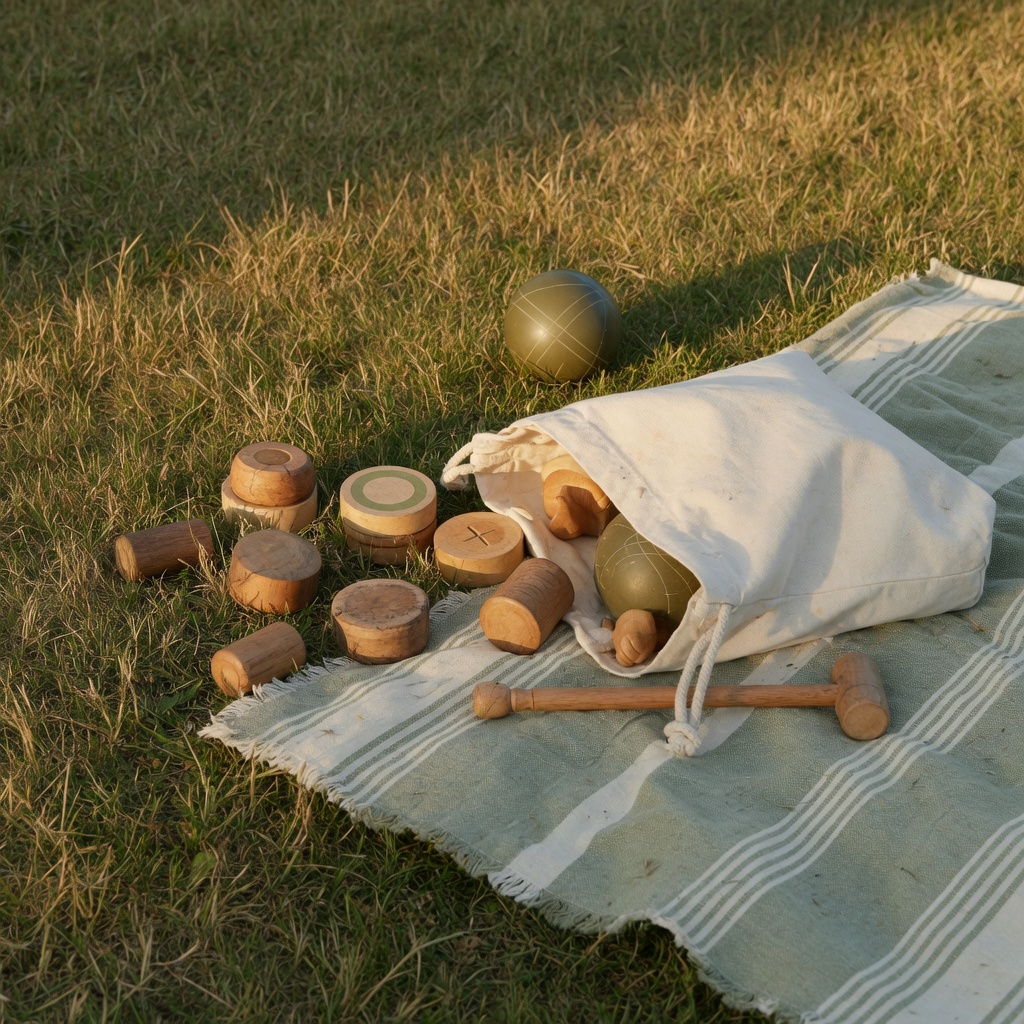
Cards, dice, dominoes, and one loud party game will cover ninety percent of evenings. For daylight, a backyard games kit — cornhole, ladder toss, the classics — does something subtler than entertainment: played in a front yard or the street itself, it is visible, and visible play recruits. A prompt deck like a talk-to-your-neighbor game feels gimmicky right up until it gets two households past the weather and into the good stuff. Nobody joins a preparedness network. Everybody joins a cornhole game.
The Songbook and the Standing Ritual
Two quieter pieces, both older than any of us.
First, the shared songbook: twenty songs everyone on the street half-knows, printed, in a binder, with chords. Singing together is the oldest synchronization technology humans own — it needs no equipment, works in the dark, and does something measurable to a group's sense of itself. The binder version costs five dollars and sits next to the games shelf.
Second, and more important: the standing ritual. Friday porch coffee. First-Sunday potluck. Sunday walk. The specific ritual matters far less than one property — it is scheduled. A scheduled thing happens without anyone deciding, which means it still happens when everyone is tired, which is exactly when it matters. A tea ceremony set that comes out every Friday at four is not a luxury item; it is a metronome. And a potluck starter kit earns its keep the same way — not by making one dinner easier but by making the next dinner assumed. The whole theory of that first table is in The First Shared Meal: a street that has eaten together is a different object from one that hasn't.
The Porch That Hosts
Culture needs a venue, which is why this guide carries shelter_hospitality as its second axis. The venue does not need to be impressive — a porch, a garage with the door up, a driveway with two strings of solar lights. What it needs is to be ready: extra folding chairs where you can grab them, a stack of blankets for October, a standing assumption that people can turn up.
Here is the compounding trick: hosting capacity is dual-use. The porch that pours coffee in June is the porch that can take in a family in January when their furnace dies. The garage that hosts game night is the garage the street already knows how to gather in when the power drops. Every ordinary evening of hospitality is a quiet rehearsal for the extraordinary one — with the enormous advantage that the rehearsals are fun.
One Small Act
This week: put three games on a shelf where guests can see them, pick one standing hour — Friday, 4pm, your porch is a fine default — and invite the three neighbors you could call at 2am. If you have not named them yet, do that first; it takes five minutes.
Auburn Gresham was not running drills in the spring of 1995. It was running errands, games, and porches. When the heat came, that turned out to be the infrastructure that held.
Reading is a way of having. This post is a knowledge offering — thinner evidence than a practiced kit, thicker than an unread tab.